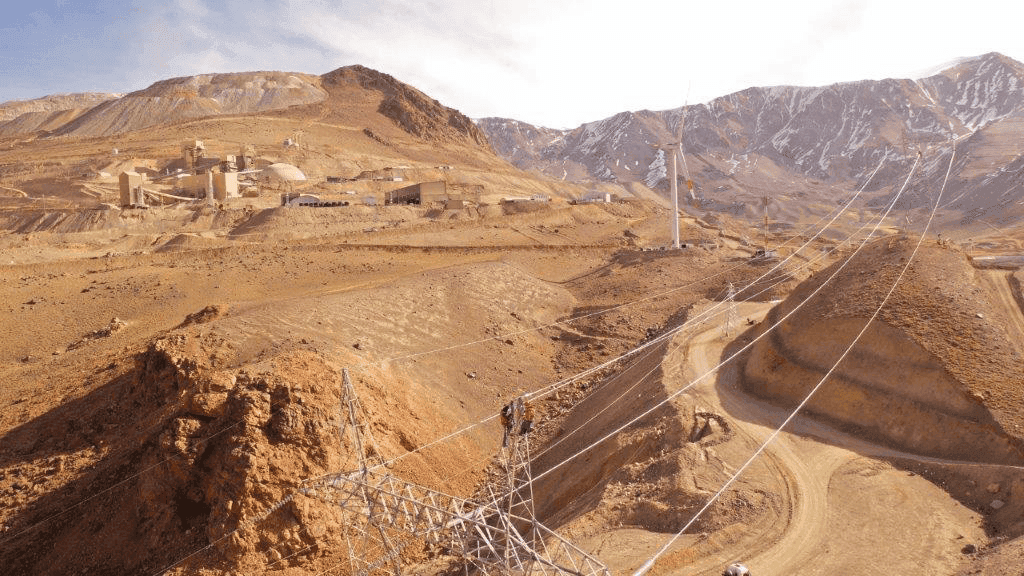
Barrick Gold Corporation has announced the production and sales volume of its iconic Veladero mine, located in the province of San Juan, in which it holds a 50% stake alongside its Chinese partner Shandong Gold. During the last quarter, the mine produced 56,000 ounces of gold, reaching a total of 113,000 ounces year-to-date. In terms of sales, Barrick reported the commercialization of 68,000 ounces of gold produced at Veladero during the second quarter (Q2), bringing the total to 101,000 ounces sold in 2024.
_**By Panorama Minero**_
The sales were made in a favorable gold market context. The average price received by the company in the second quarter was US$2,338 per ounce. It is worth noting that this Friday, the gold price started at US$2,370 per ounce, and according to projections by J.P. Morgan, the price of gold could reach a new all-time high by the end of 2024, surpassing US$2,500 per ounce.
In a preliminary report, Barrick also detailed the total gold and copper production in the second quarter for all its operational mines. The company produced approximately 948,000 ounces of gold and 43,000 tonnes of copper globally, with preliminary sales of 956,000 ounces of gold and 42,000 tonnes of copper. Barrick expects gold and copper production to progressively increase each quarter in 2024, with a higher weight in the second half of the year, remaining in line with its annual projections.
"The gold market has shown remarkable growth, with an average gold price received in the second quarter of US$2,338 per ounce and an average copper price of US$4.42 per pound. Gold production in the second quarter exceeded that of the first quarter due to increased operations at Turquoise Ridge (USA), the successful production ramp-up at Porgera (Papua New Guinea), and significant increases at Tongon (Ivory Coast), North Mara (Tanzania), and Kibali (Democratic Republic of Congo). These increases were partially offset by planned lower production at Cortez (USA) and Phoenix (USA), while production at Pueblo Viejo (Dominican Republic) remained stable."
Q2: Barrick reported production of 56,000 gold ounces at Veladero
2 minutes